
Introduction
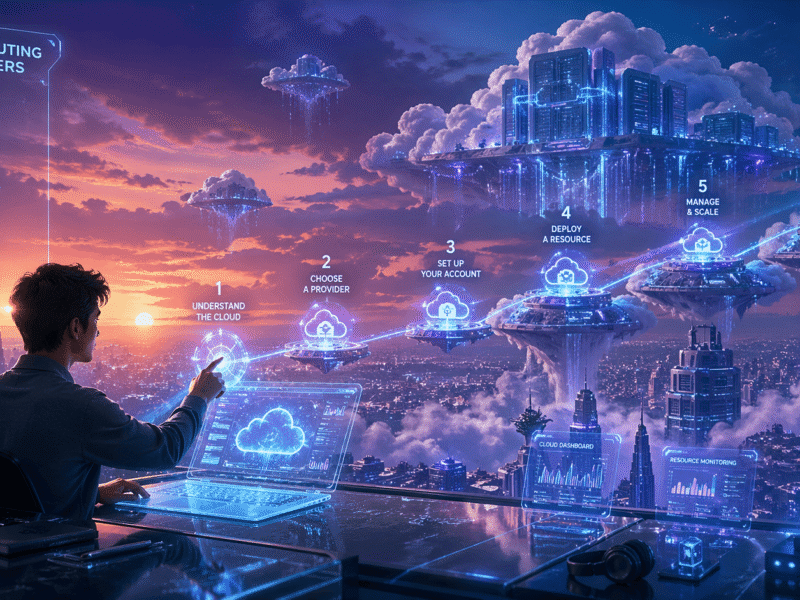
If you’ve ever used Google Drive to store files watched movies on Netflix or backed up photos from your phone then congrats you’ve already used cloud computing. Sounds fancy right? But honestly, cloud computing is just a smarter way of storing and accessing data over the internet instead of relying on your computer’s hard drive. In 2026 cloud computing is everywhere. From small startups to huge companies, everyone depends on it. So if you’re into tech or even just curious understanding cloud computing is kind of a must.

What Is Cloud Computing?
Cloud computing is the delivery of computing services like storage, servers, databases, networking and software over the internet aka “the cloud”. Instead of saving files on your laptop or running programs locally, everything happens online. You can access your stuff anytime, anywhere as long as you have internet. Think of it like this:
Your computer = your backpack
Cloud computing = a giant locker you can open from anywhere
Way more convenient right?
How Does Cloud Computing Work?
Okay, so here’s the simple version:
Cloud computing works through remote data centers. These are huge buildings filled with servers basically super powerful computers. When you upload a file or run an app online you’re actually using those servers. Here’s the process:
- You connect to the internet
- You access a cloud service like Google Docs
- Your data is stored and processed on remote servers
- You get results instantly on your device
You don’t need to worry about hardware, maintenance or storage space. The cloud provider handles everything.
Types of Cloud Computing
There are three main types of cloud computing. Don’t worry they sound complicated but are actually pretty simple.
- Public Cloud
This is the most common type. Services are available to anyone over the internet.
Examples:
- Google Drive
- Dropbox
- Microsoft Azure
It’s affordable and easy to use which is why most people and small businesses go for it.
- Private Cloud
This is used by a single company or organization. It offers more control and security.
Big companies use private clouds to protect sensitive data.
- Hybrid Cloud
This is a mix of both public and private clouds.
Companies use hybrid clouds when they want flexibility keeping some data private while using public cloud for other tasks.
Types of Cloud Services
Cloud computing is also divided into service models. These are basically different levels of control and responsibility.
- IaaS (Infrastructure as a Service)
You get access to virtual servers and storage.
Best for: Developers and IT teams who want control
Example: Hosting websites
- PaaS (Platform as a Service)
Provides tools to develop and manage applications.
Best for: App developers
You don’t need to manage hardware or software updates.
- SaaS (Software as a Service)
This is what most people use daily.
Examples:
- Gmail
- Netflix
- Zoom
Everything runs in your browser no installation needed.
Advantages of Cloud Computing
Cloud computing is popular for a reason. Here are some major benefits:
- Cost Effective
No need to buy expensive hardware. You pay only for what you use.
- Accessibility
Access your data anytime, anywhere.
- Scalability
Need more storage or power? Just upgrade your plan no hassle.
- Automatic Updates
No more annoying software updates. Everything is handled automatically.
- Backup & Recovery
Your data is safely stored and easy to recover if something goes wrong.
Disadvantages of Cloud Computing
Okay it’s not perfect. Here are a few downsides:
- Internet Dependency
No internet = no access. Simple as that.
- Security Concerns
Even though cloud providers are secure, data breaches can still happen.
- Limited Control
You rely on third party providers for everything.
Real Life Examples of Cloud Computing
Still confused? Here are some real life examples you probably use:
- Streaming movies on Netflix
- Saving files on Google Drive
- Using iCloud on iPhone
- Online gaming platforms
- Email services like Gmail
Basically if it runs online there’s a good chance it’s using cloud computing.
Why Cloud Computing Is Important in 2026
In 2026 cloud computing isn’t just a trend it’s the backbone of modern technology.
Here’s why it matters:
- Supports remote work and online learning
- Powers AI and machine learning systems
- Helps businesses scale quickly
- Enables faster app development
- Stores massive amounts of data efficiently
Without cloud computing most modern apps and services wouldn’t even exist.
Future of Cloud Computing
The future looks pretty exciting. Here are some trends to watch:
- AI integration with cloud platforms
- Edge computing for faster processing
- More focus on security and privacy
- Growth of multi cloud strategies
Cloud computing will keep evolving and honestly, it’s only going to get bigger.
Conclusion
Cloud computing might sound complicated at first but it’s actually super simple once you break it down. It’s all about using the internet to store data and run applications instead of relying on your own device. Whether you’re a student, developer or just someone who uses the internet daily, cloud computing is already part of your life. And in 2026 it’s more important than ever.